Written by: Nadine Elderini
Nadine is the founder of Rootlands and a culture and wellness enthusiast who loves to express her thoughts through yoga, writing, and filmmaking.
“ My curiosity naturally led me to explore the motifs and patterns found across Nubian homes and everyday objects…and perhaps this is one of the most beautiful expressions of culture.”
In some places, colour isn’t just a palette, but a story told over generations. Nubia is one of those places.
As soon as you arrive, you feel a shift in the atmosphere, something I can only describe as a sense of creative expression.
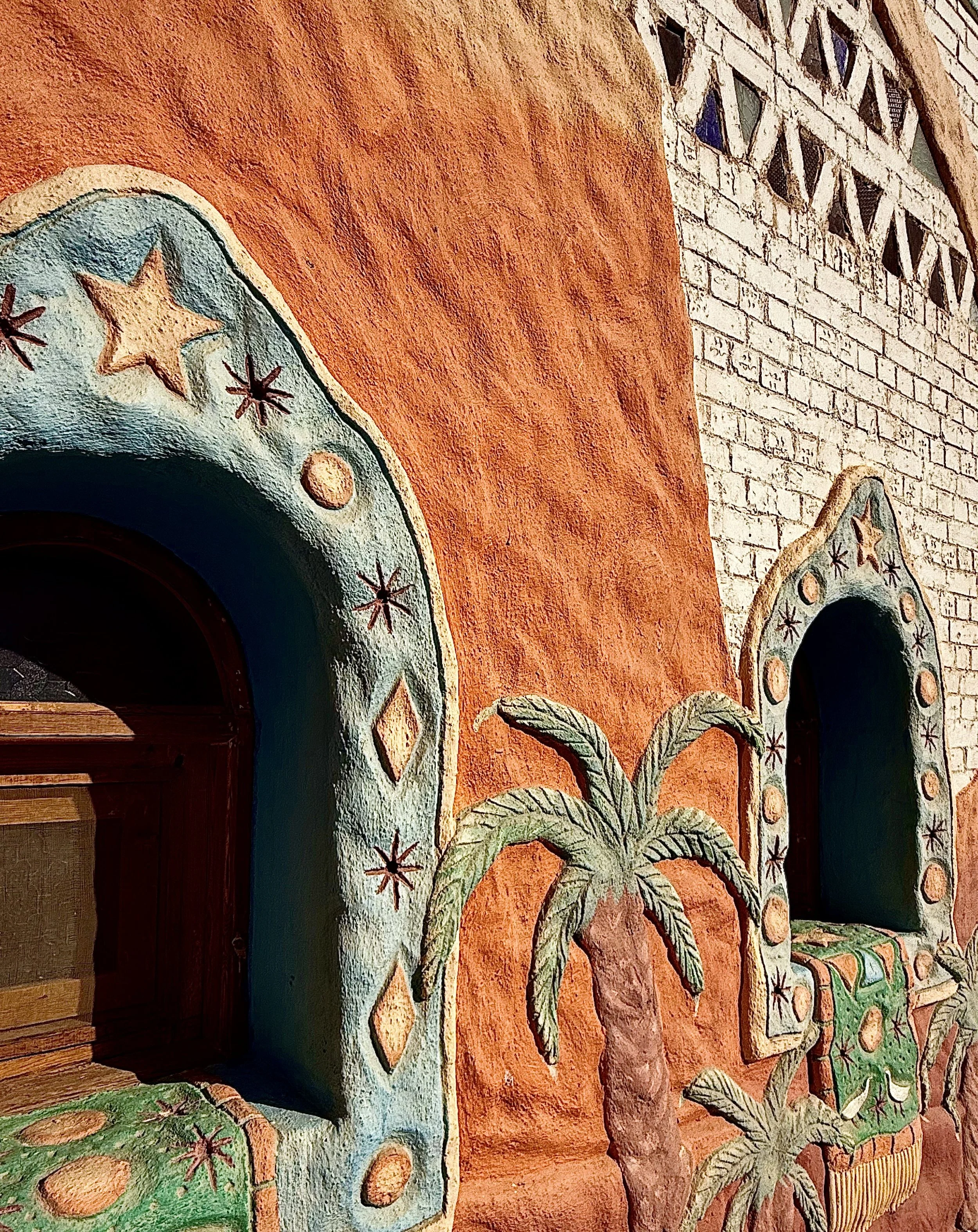
Nubia is known for its bright, colourful architecture, beautiful motifs, patterns, and dome-shaped clay buildings.
But the more time you spend there, the more you realise that colour is only one of the many ways its culture expresses itself.
Nubia is often associated with the ancient Egyptian word "Nub", meaning gold, a reference to the region's rich gold resources, but I found myself looking at Gold a little differently.
Beyond the precious metal, I saw it in the golden reflection of the sun over the Nile, a river that is deeply appreciated and respected by the people who live alongside it. It is a source of life, livelihood, and pride.
I also found gold in the people. Their hospitality and generosity are something you feel from the moment you arrive; you are greeted with a cold glass of fresh karkadeh (hibiscus), invited into Nubian homes for tea or coffee, and welcomed into conversations about their stories, spices, rituals, beliefs, and traditions that have been passed down through generations.
And perhaps this is one of the most beautiful expressions of culture: the way it lives between people.
In Nubia, community is not just an idea. It is something you can experience in everyday life, through sharing food, welcoming strangers, preserving traditions, and passing stories from one generation to another.
It is a reminder that culture does not live only in buildings, museums, or old photographs. It lives in the people who carry it, practise it, and share it with others.
The land itself tells a story. Through the Nile, the colourful streets, the small shops, the islands, and the food that carries a feeling of home.
There is a certain calmness in the atmosphere, a subtle shift in energy that you begin to notice as you arrive in the land, and it increases as you spend more time there.
My curiosity naturally led me to explore the motifs and patterns found across Nubian homes and everyday objects.
From date palm motifs, inspired by the surrounding landscape and often associated with abundance and resilience, to stars, crescents, and colourful geometric shapes that carry different meanings and connections to life and traditions.
Even the boat-shaped drawings reflect the deep relationship between Nubian communities and the Nile.
Then there are the traditions and rituals that make Nubia even more fascinating to someone arriving there, like the Crocodile figures and the tradition of keeping crocodiles in some Nubian homes, which are associated with strength and protection against the evil eye.
There are also expressions of beauty and self-care, from women wearing bold colours and expressive jewellery to the beautiful art of henna and the traditional delka skin ritual, which has roots in Sudanese beauty traditions.
These everyday expressions tell us so much about how people relate to their surroundings, their history, their beliefs, and one another.
The people and landscape of Nubia hold a deep sense of culture and heritage that you can see and feel in the details, in the faces and expressions of the people you meet, in the stories they share, and in the traditions they continue to practise.
If you ever find yourself journeying to this part of Egypt, with its islands, the Nile, and the nearby Temple of Philae, dedicated to the goddess Isis, allow yourself to explore beyond the places on your itinerary.
Take the time to visit a Nubian home, listen to a story, learn about a ritual, share a meal, and notice the little things.
Because sometimes, the most meaningful way to experience a place is not simply to see where you are, but to connect with the people who make it what it is.
